
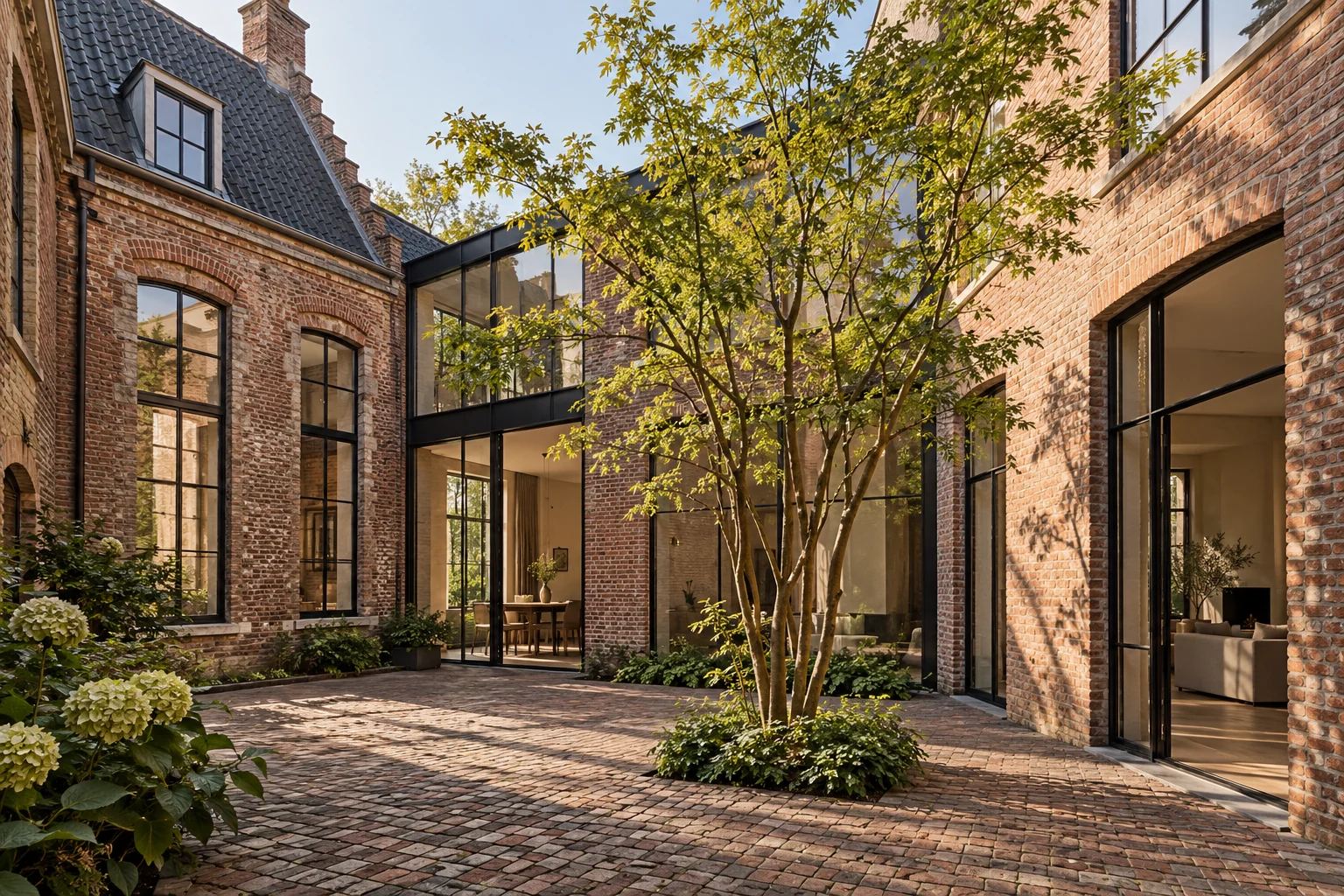
A situation to test your plan against
Existing joints, repairs and colour differences reveal how a wall is built. Record that situation before choosing new material. A visible junction needs substrate assessment, not simply a matching colour.
What this work involves
Review masonry, joints, junctions and moisture together. Cleaning or a new coating does not automatically solve underlying defects. Assess the cause and test treatment where appropriate.
- Masonry and joint survey
- Damaged material repair
- Appropriate cleaning and finish
- Window and roof connections
- Access and protection
Test new facade material against substrate and existing details.
What the drawing needs to explain
Mark intact, damaged and unassessed areas on photographs. Add the old-to-new junction detail with proposed materials and treatment.
Allow for later maintenance
Keep product information and photographs of the assessed substrate. They support later inspection without reconstructing the original repair decision.
Which trade-off matters?
Full renewal creates a uniform appearance, while targeted repair preserves more existing material. Compare both using a sample area and assess technical compatibility too.
Compare the complete intervention
Price investigation, sample work and repair extent separately. Agree how findings after exposing the substrate are recorded before expanding the repair area.
How to review the result
Compare completed repairs with the approved sample area. Review junctions and material behaviour; colour difference alone does not determine execution quality.
Cost factors for this service
Area, damage, method and scaffolding affect the price. A test area may help establish the approach.
Bring this to the discussion
Overall and detail photographs, damage and known moisture issues.
Questions about the work
Is cleaning always appropriate?
No. Material, age and condition determine suitable methods. Excessively aggressive cleaning can damage a facade.
Is matching-looking repair always the right solution?
Appearance is one aspect. Assess substrate, moisture behaviour and compatibility as well. A sample area helps discuss technical requirements and the intended appearance together.
The design situations here illustrate choices; they are not completed projects or a diagnosis of your property.