
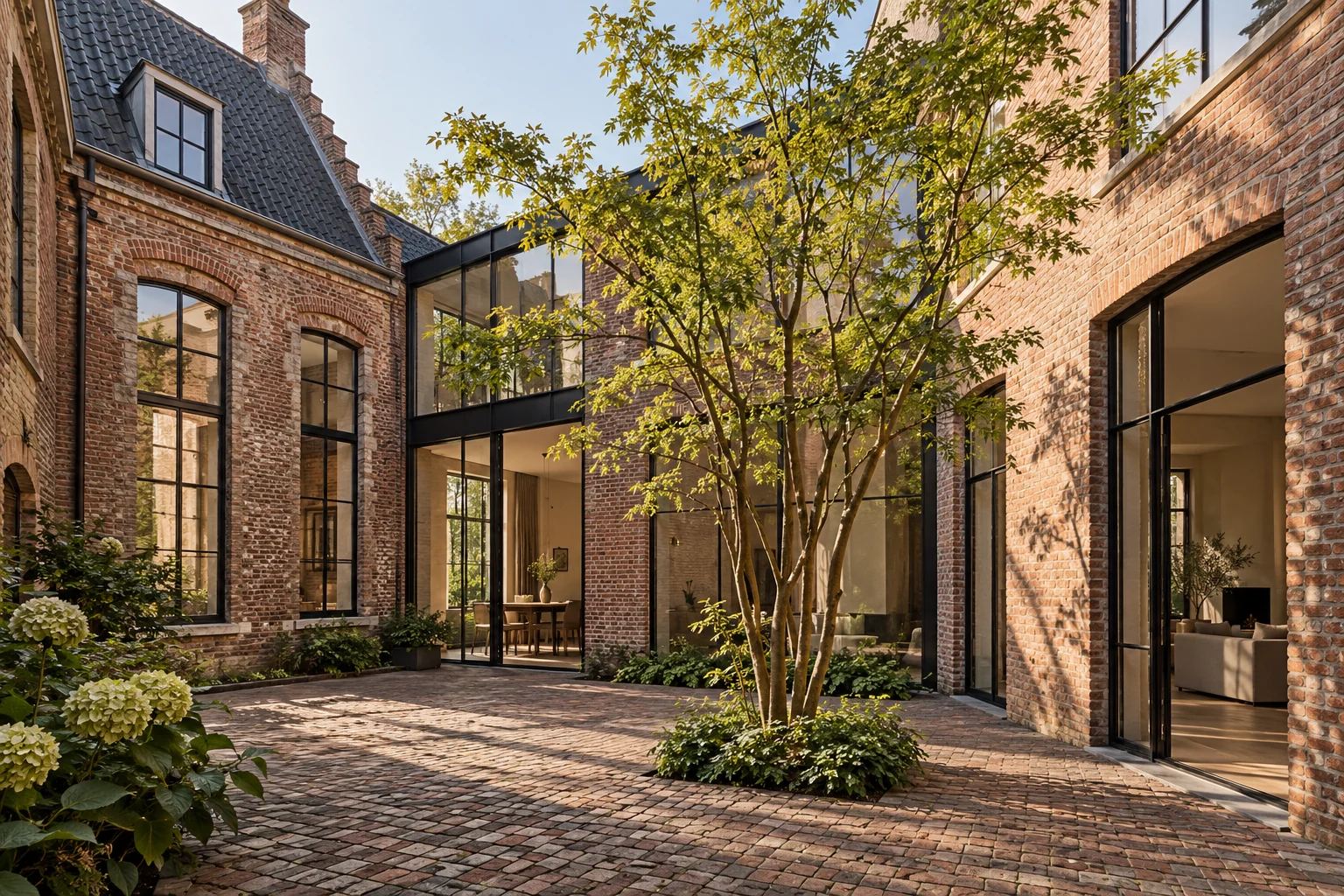
A situation to test your plan against
Existing joints, repairs and colour differences reveal how a wall is built. Record that situation before choosing new material. A visible junction needs substrate assessment, not simply a matching colour.
What this work involves
Assess the condition of bricks and joints. The new mortar needs to be compatible with the existing masonry.
- Existing joint condition
- Joint profile and colour
- Sample panel and repair extent
Investigate existing connections before attaching new structural elements.
What the drawing needs to explain
Mark intact, damaged and unassessed areas on photographs. Add the old-to-new junction detail with proposed materials and treatment.
Decide this before construction
Start with a survey and trial repair, reviewing the result before treating the whole surface. Protect retained elements while removing adjoining material.
Compare the complete intervention
Price investigation, sample work and repair extent separately. Agree how findings after exposing the substrate are recorded before expanding the repair area.
How to review the result
Compare completed repairs with the approved sample area. Review junctions and material behaviour; colour difference alone does not determine execution quality.
Cost factors for this service
Costs depend on facade area, joint repairs, access and protection. Ask for the scope and selected specification to be described separately.
Bring this to the discussion
Photographs of the existing situation, available drawings and your requirements for repointing & masonry joints. Identify the elements that should remain.
Questions about the work
What should I discuss before arranging repointing & masonry joints?
Repointing alone will not resolve an underlying moisture or movement problem. Have possible causes investigated alongside the repair.
Is matching-looking repair always the right solution?
Appearance is one aspect. Assess substrate, moisture behaviour and compatibility as well. A sample area helps discuss technical requirements and the intended appearance together.
The design situations here illustrate choices; they are not completed projects or a diagnosis of your property.